Iran warns South Korea against military role in Persian Gulf
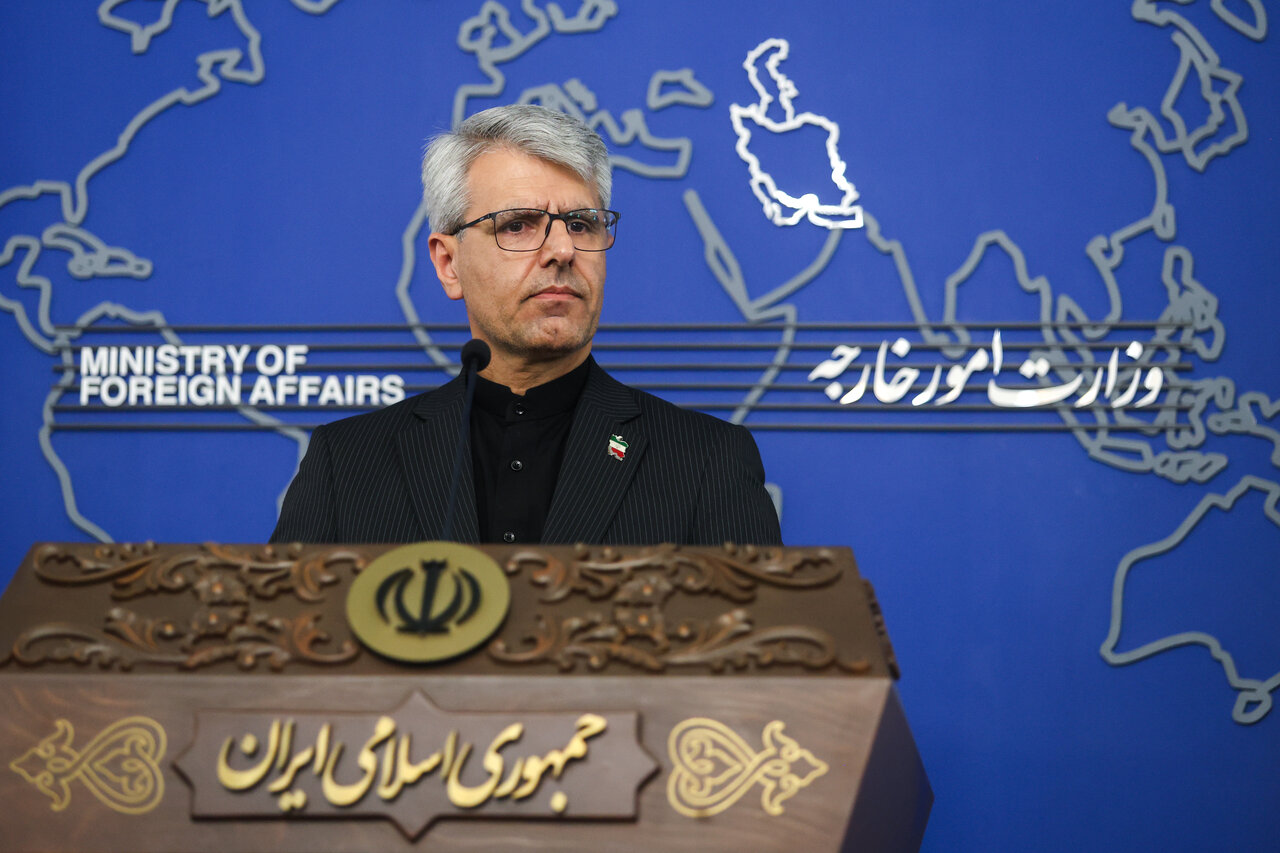
TEHRAN — Iran has warned South Korea against any military involvement in the Persian Gulf or the Strait of Hormuz, while accusing Washington of creating disruption in regional shipping and rejecting Western efforts to revive international pressure over Tehran’s nuclear program.
The warnings, delivered by Foreign Ministry spokesman Esmaeil Baqaei on Monday, came as Tehran sought to reinforce its position on three increasingly intertwined issues: security in the Strait of Hormuz, the continuing confrontation with the United States and Israel, and international efforts to exert pressure on Iran through the International Atomic Energy Agency and the United Nations.
In a Korean-language post on X, Baqaei highlighted the long-standing relationship between Tehran and Seoul but drew a sharp distinction between economic and diplomatic ties and military cooperation with the United States.
Iran and South Korea have maintained diplomatic relations for more than six decades, he said, adding that Tehran values its traditionally friendly relations with Seoul. But under current circumstances, he warned, any operational military participation by South Korea in the Persian Gulf or the Strait of Hormuz would be viewed by Iran as direct support for an aggressor.
Baqaei argued that Iran is currently defending itself against 'US aggression and attacks on Iranian civilians.' Against that backdrop, he said, the deployment or participation of foreign military forces in the strategic waterway could carry serious consequences.
He also rejected the idea that sovereign states should respond to US pressure by joining military operations against Iran, saying that no responsible government should submit to coercion to participate in aggression.
Baqaei separately accused Washington of attempting to shift responsibility for disruptions to commercial shipping and rising energy prices onto Iran, arguing that the crisis in the Strait of Hormuz was triggered by the US and Israel.
In a post on X, he said the waterway had remained open until February 28, when the United States and Israel launched their military campaign against Iran.
Baqaei said the conflict had disrupted commercial shipping, halted tankers, and contributed to higher energy prices. He accused Washington of attempting to portray the resulting economic consequences as a cost imposed on the international community by Iran.
Iran warns against renewed nuclear pressure
Baqaei also rejected efforts by the United States and Israel to pressure IAEA Director General Rafael Grossi and advance a move to refer Iran's nuclear file to the UN Security Council.
He criticized a draft resolution based on a recent IAEA report, arguing that Western governments had repeatedly turned to nuclear watchdog when they were unable to achieve their political objectives through other means.
He also challenged the legal rationale being advanced by Western governments over the so-called snapback mechanism, under which previous UN Security Council sanctions could potentially be restored.
According to Baqaei, Western governments' current actions contradict their own interpretation of the mechanism and effectively reinforce the position previously taken by Iran, China and Russia that the mechanism is not applicable in the present circumstances.
He also accused the three European powers involved in the process of having lost credibility with Tehran and described some of their demands as unreasonable.
The spokesman placed particular responsibility on Washington for the current impasse over IAEA access to Iranian nuclear facilities. He argued that US and Israeli military actions had created the circumstances that prevented normal cooperation between Iran and the Agency.
Baqaei warned that Tehran would respond to any new action against it, describing the latest diplomatic pressure as evidence of hostile intentions and an effort to further escalate tensions.
Iran accuses US of deliberately targeting civilians
Responding to questions about attacks on civilian sites, Baqaei said Iran would continue to hold the United States accountable for violations of international humanitarian law.
He cited several incidents, including a deadly attack on a wedding ceremony on Iran's Sirik Island, as examples of a broader pattern of attacks against civilians.
Baqaei questioned how US forces, which possess highly accurate weapons, could have failed to identify civilian locations such as a school in Minab, a stadium in Lamerd or the wedding venue in Sirik.
Iran, he said, should not allow such incidents to disappear into history without accountability.
Tehran credits Oman with good faith on Hormuz talks
Against the backdrop of the confrontation over the Strait of Hormuz, Tehran also offered a comparatively positive assessment of Oman's role in recent discussions concerning maritime security.
Baqaei said Oman had acted in good faith during talks with Iran on shipping security and emphasized the importance of the interests of the two littoral states.
Oman, he noted, is a neighboring coastal country with longstanding and close relations with Iran and has played a constructive role throughout the process.
At the same time, Baqaei cautioned that the outcome of the next stages remained uncertain.
He said an understanding between Iran and Oman was necessary for securing shipping routes through the Strait of Hormuz, but by itself would not be sufficient to resolve the broader security crisis.
Leave a Comment